
Yes, an untreated eyelid problem can permanently damage vision, though that is the end of a long road rather than the usual outcome. With entropion, the lid rolls inward and the lashes drag across the cornea, and that constant friction can wear an ulcer that heals into scar tissue the eye has to see through from then on. Ectropion sags the other way, leaving the inner lid and the eye surface exposed to dust, wind, and dryness, which brings repeat infections and irritation that get harder to settle the longer they run. Both conditions respond well to treatment when the eyelid position is corrected before the cornea is damaged, which is why a lid that looks a little off is worth an exam now rather than next season.
Animal Medical Center of Marquette treats entropion and ectropion as part of our veterinary care for dogs and cats in Marquette, and getting ahead of corneal damage is the whole reason we want to see that eye early. At our AAHA-accredited hospital we can check the cornea for a scratch, get your pet out of pain, and tell you honestly whether the lid needs surgery now or can be watched, with room for urgent and emergency visits when an eye cannot wait. If that eye looks cloudy, painful, or different from last week, schedule an exam with our team and describe what you are seeing.
Eyelid Position in Four Points
- An inward-rolling lid (entropion) drags lashes and facial hair across the cornea with every blink; an outward-sagging lid (ectropion) exposes the pink inner lining to air, dust, and pollen.
- Most cases are built into the shape of the face a pet was born with, so they run in certain breeds and often show up in both eyes.
- Squinting, tearing, pawing at the face, or an eye held shut means the eye hurts and needs an exam rather than another week of watching.
- Surgical correction holds for most pets, and results are best when the lid is straightened before the cornea scars.
What Makes an Eyelid Roll In or Sag Out?
Most cases trace back to facial structure rather than injury: the way the skull, the eye socket, and the facial skin fit together decides where the lid sits, which is why eyelid disorders cluster in certain breeds of dogs and cats.
- Dogs prone to entropion: Loose facial skin and heavy brows set the stage in Shar-Peis, Chow Chows, Bloodhounds, and Mastiffs, deep-set eyes do it in Labradors, Golden Retrievers, and Rottweilers, and so do the shortened faces of Bulldogs and Pugs. Entropion runs in family lines closely enough that breed clubs track it when planning litters, so a puppy with an affected parent or littermate needs an early look at the lids.
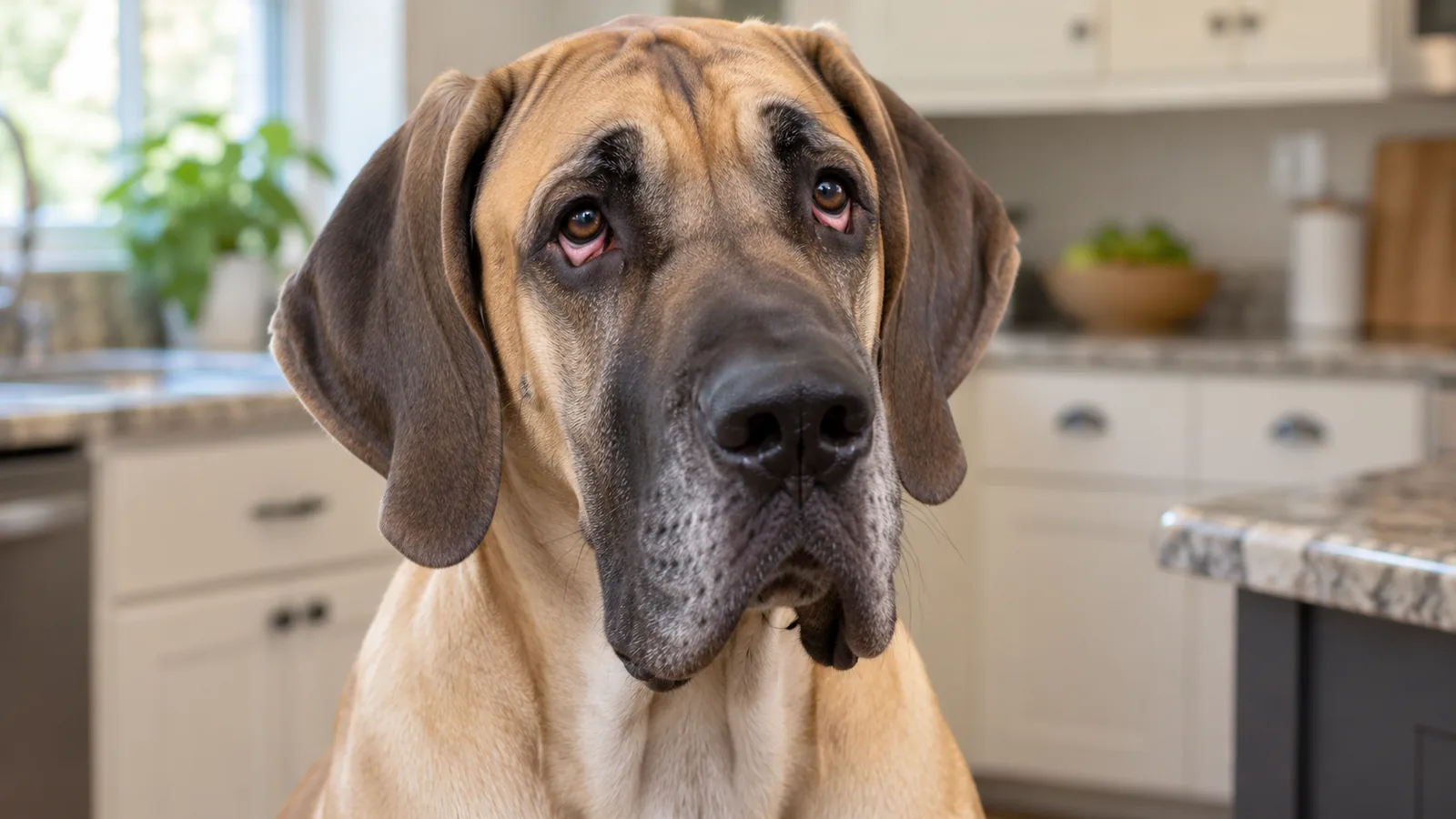
- Dogs prone to ectropion: The droopy lower lid of a Bloodhound, Basset Hound, Cocker Spaniel, Saint Bernard, or Great Dane is the classic setup. A few dogs carry both at once, with the center of the lower lid sagging out while the corners roll in.
- Cats: Flat-faced breeds such as Persians, Himalayans, and Exotics have shallow eye sockets and a shortened muzzle, a combination that can pull the lids out of alignment and send tears spilling down the face instead of through the drainage ducts.
- Beyond breed: Tissue relaxes with age, so lids that sat fine for ten years can start to sag, old injuries and long-running inflammation can scar a lid into a new position, and a growth on the lid margin can push it out of alignment. Pain alone can also roll a lid inward, so a pet squeezing an eye shut over an ulcer or a grass seed can look exactly like true entropion.
For breeds on that list, we check lid position at wellness exams here in Marquette long before an eye looks sore.
How Do I Tell Which One My Pet Has?
With entropion the lid margin turns in and hair rubs the cornea, so the pet squints. With ectropion the lower lid droops away from the eye, so what you see is exposed pink tissue, constant watering, and crust in the corner.
| Feature | Inward-rolling lid (entropion) | Outward-sagging lid (ectropion) |
| Pets we see it in most | Young dogs with loose or flattened faces, older cats | Dogs bred for a droopy lower lid, older pets whose tissue has relaxed |
| Biggest danger | Ulcers on the cornea that heal into scar | Infections that keep coming back, chronic dryness |
| What you notice | A squint, watering, an eye kept shut | A sagging lower lid, pink lining on show, crusted corners |
| Direction the lid moves | Turns in against the eyeball | Falls away from the eyeball |
| What touches the cornea | Hair and lashes on every blink | Nothing touches it, and nothing protects it either |
Which Eye Signs Mean My Pet Needs to Be Seen?
Squinting, pawing at the face, flinching from bright light, and an eye held shut are signs of eye pain, not quirks of a wrinkly face. A pet showing any of them needs the cornea checked, because the damage that threatens vision happens on the eye surface rather than in the lid itself.
- What entropion does over time: Hair dragging across the cornea wears through its surface a little more each day, and the corneal ulcers that follow can deepen within days until the eye itself is at stake. Healed ulcers often leave scar tissue, and dense scarring across the center of the cornea can dim vision for good.
- What ectropion does over time: Exposed inner lid tissue dries out and traps pollen, chaff, and the road sand that follows an Upper Peninsula winter, which keeps inflammation of the eye surface, known as conjunctivitis, coming back. If your pet’s eye discharge changes from clear tearing that thickens into yellow or green, it means they have picked up a secondary infection, which needs a call rather than another week of warm compresses.
- Why waiting costs you: A lid rolled in for months can scar in that position, and pigment can creep across the cornea.
Never put a leftover eye ointment from another pet or another problem into that eye, because a steroid drop can make a corneal ulcer dramatically worse. Don't trim the lashes yourself either, since short stubble rubbing the cornea can do more harm than the hair you removed. If your pet is rubbing at the eye, keep a cone on until we can see them. A sudden change, a cloudy eye, or an eye squeezed shut can't wait, since those can also point to a problem inside the eye rather than the lid, and we see urgent care during our open hours, so call first.
How Is an Eyelid Problem Diagnosed?
An eyelid exam starts with the eye surface rather than the lid. A fluorescein stain, a dye that makes a scratch on the cornea glow, shows whether the surface is already damaged, and a tear test measures whether the eye makes enough tears to protect itself. Those two common eye tests matter because straightening a lid won't help an eye whose real trouble is a dried-up tear film.
We watch both eyes from across the room first, because a nervous pet might squint, and a squint hides the problem. Then we put in a drop of local anesthetic. If the squint relaxes and the lid falls back where it belongs, pain was rolling it in and the plan changes; if the lid stays rolled, the problem is the way it's built.
Other findings change the plan:
- Extra lashes along the lid margin: called distichiasis, and they scratch the cornea the way entropion does.
- A lash growing through the inner lid: called an ectopic cilium, and it needs its own treatment.
- Where the tears go: whether they leave through the ducts or spill down the face tells us if the lid, the duct, or both are involved.
Fear-Free handling matters more than usual with a sore eye: an eyelid problem means several rechecks, and a pet who learns that eye exams hurt gets harder to examine at each one.
What Are the Treatment Options for a Misplaced Eyelid?
Treatment runs from a few temporary stitches to permanent surgical correction, and your pet's age is often the deciding factor.
Does a Puppy With Entropion Need Surgery Right Away?
A puppy often doesn't need a permanent repair yet. Temporary eyelid tacking uses a few small sutures to hold the lid away from the eye for several weeks, shielding the cornea while the face finishes growing. It can be repeated if the lid rolls back in, and it's also the right tool when pain is doing the rolling. We reassess once the anatomy stops changing, and plenty of puppies never need more than that.
What Happens During a Permanent Eyelid Repair?
Permanent repair removes a small, measured crescent of skin and muscle so the lid settles back where it belongs, and it suits a pet whose face has matured and whose lid position is structural. How much tissue to take is the central call in eyelid surgery: remove too much and an inward-rolling lid becomes a sagging one, and because the measurement is made at the table, a conservative first pass beats an ambitious one. A slightly undercorrected lid can be adjusted later.
Where the repair happens depends on the lid itself. A modest correction on a mature dog asks less than a severely rolled lid, an eye that already has surface disease, or a second try after an earlier procedure. That call isn't made over the phone. Our veterinarians measure the lid at the exam first, and the measurement is what settles who does the correction and when it goes on the schedule, so bring the eye in before you plan around a surgery date.
How Is Entropion Treated in Cats?
Entropion in cats usually appears later in life and often rides along with long-standing inflammation of the eye surface, so the plan has to settle the lid position and calm the surface disease at once. Old feline herpesvirus damage is often part of the picture, and some cats need a combination of techniques rather than one standard repair.
What Does Recovery Look Like After Eyelid Surgery?
Recovery is mostly about protecting the repair for about two weeks: the cone stays on, eye medication goes in on schedule, and activity stays low.
What Happens on Surgery Day?
The day starts with a recheck, because swelling, a healing ulcer, or a few weeks of growth can change the measurement, and the lid is measured and marked before anything is removed. Age, breed, body condition, and bloodwork shape the anesthesia plan, and at our AAHA-accredited practice someone is assigned to watch and record your pet's vital signs the whole time they're asleep. Pain medication given before the procedure works better than medication given after, and a local nerve block can mean less anesthetic gas overall.
What Is Normal in the First Week?
Normal looks like a groggy first evening with no interest in dinner, then a little bruising, mild tearing, and a pet who's quieter than usual. The lids will look puffier than you expect, which is swelling rather than the repair failing.
Worth a phone call:
- Swelling that grows instead of shrinks after day three
- Yellow or green discharge
- An eye squeezed shut again
- A loose suture
- A pet who stops eating
The cone is not optional, because one good rub against the carpet can undo the whole repair, and the rubbing happens in the few minutes it's off for dinner. Administering eye medications goes better when you steady the head from behind and come in from above, out of your pet's sight line. Leave about five minutes between two different drops, and always give drops before ointments. If something looks wrong, or you aren't sure what you're seeing, call us instead of waiting for the recheck.
How Long Until the Lid Settles?
| When | What's happening | What it needs |
| First 2 to 3 days | Swelling and bruising peak around the lid | Collar on, medications started, quiet rest |
| First 2 weeks | The incision knits and swelling recedes | Collar stays on, leash walks only, no baths or swimming |
| Usually 10 to 14 days | Sutures come out at a recheck | A look at the cornea and the new lid position |
| 4 to 6 weeks | Lid position finishes settling as swelling clears | Final recheck, with small revisions occasionally recommended |
| Long term | Comfort holds, and any old corneal scar stays as it is | Lids and cornea checked at routine visits |
How Durable Is an Eyelid Repair?
Results are good for most pets, and the first change families notice is an eye that opens all the way. How long the repair holds depends on four things:
- How far out of position the lid sat
- How healthy the cornea still is
- Whether the face has finished maturing
- How well the repair gets protected at home
Scar tissue already on the cornea may not clear. Surgery usually ends the pain and stops the ongoing damage, and vision dimmed by surface swelling and tearing often improves once the rubbing stops. If your dog shows in conformation, check with the breed registry before scheduling, since some registries have rules about surgically corrected hereditary faults.
Common Questions About Rolled-In and Droopy Eyelids
What will the eye look like once it heals?
The eye usually looks better, because it opens evenly and stops weeping down the face. A thin line of healed skin near the lid margin usually fades over a few months and disappears into the hair in most coats. A lid that was severely rolled may sit slightly differently than the other side once everything settles.
Can entropion come back after it's been fixed?
Entropion can come back, though a full return is uncommon after a mature pet has had a permanent repair. The likelier scenarios are a deliberately undercorrected lid that needs a small adjustment, or a young dog whose face keeps changing after an early procedure. Ongoing skin disease or repeated inflammation around the lids can also pull things out of position.
My older dog's lower lids droop, but the eyes seem fine. Does that still need surgery?
Mild ectropion in an older dog is often managed rather than operated on. If the eye stays comfortable, the cornea is clear, and tear production is adequate, keeping the area clean and treating flare-ups as they come can hold for years. Surgery enters the conversation when infections keep recurring, the exposed tissue stays sore, or the cornea starts to show damage, so give us a call if any of that turns up before the next wellness visit.
Have That Eye Looked At Before the Cornea Scars
An eyelid sitting a little wrong is one of the more fixable things we see, and the results are best while the cornea is still clear. If your pet is squinting, tearing, or holding an eye shut, book an exam at Animal Medical Center of Marquette and we'll check the eye surface and the lid position together. If the eye gets worse after we've closed, VetTriage can look at it overnight and tell you whether it needs an emergency hospital before morning.