

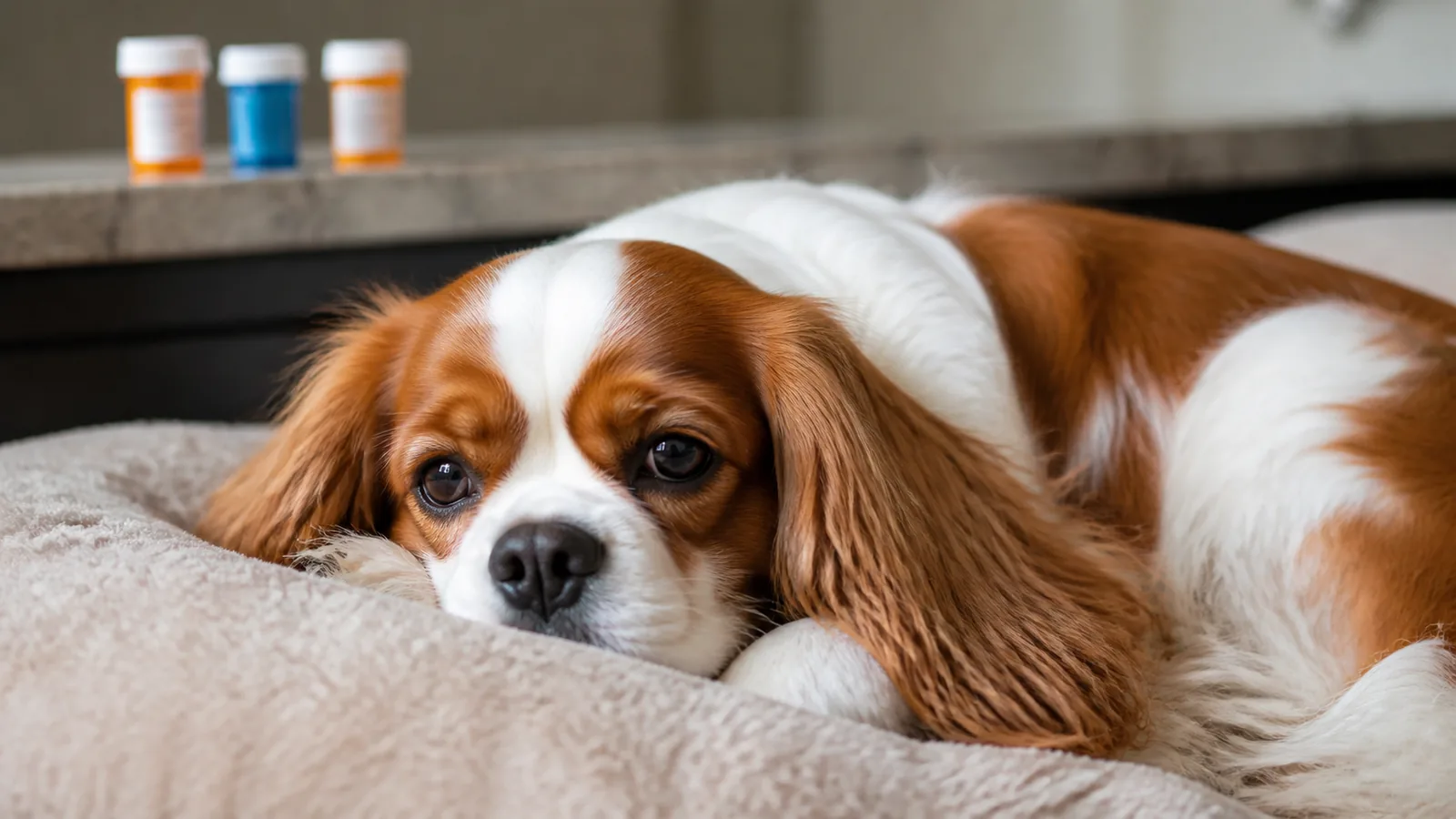
Every heart medication your dog or cat goes home with is doing one specific job, and no single drug covers all of them. Some medications help the heart pump more efficiently and ease the workload it carries; others relax blood vessels so there is less pressure to push against with every beat. Diuretics pull fluid out of the lungs. Several bottles on the counter do not mean your pet is worse off than you thought. It is a sign the plan is covering more than one piece of the problem at once, which is a large reason many pets with heart disease keep feeling like themselves and enjoying their days.
Animal Medical Center of Marquette is AAHA accredited and provides cardiology care for dogs and cats, so a new cough or a change in the way your pet breathes can be looked at close to home. We listen for a murmur or an irregular rhythm, start the diagnostics that point toward the type of heart problem, and explain what every medication in the plan is doing and why. When a new cough shows up in your dog, your cat's breathing looks off, or you want to make sure your current heart medication plan is still working, request an appointment and let us take a listen.
What Each Bottle on the Counter Does
- Pimobendan helps the heart squeeze harder and opens up blood vessels, and starting it before symptoms appear buys many dogs a long stretch of good time.
- Diuretics such as furosemide pull fluid out of the lungs, which is what quiets the cough, and they call for regular lab work to keep kidney values and electrolytes steady.
- ACE inhibitors ease the pressure the heart works against and beta-blockers steady a fast or irregular rhythm, which is why cardiac plans usually stack several drugs.
- Counting your pet's breaths while they sleep is the most useful thing you can do at home, and a sustained climb past 40 means calling us right away.
Which Heart Symptoms Mean You Should Call Us Today?
Breathing is what sorts urgent from routine. A pet who's working hard to move air, breathing fast while resting, or dropping to the floor without warning needs to be seen right away. A soft new cough, less stamina on the same route you've walked for years, or a sudden lack of interest in jumping onto the couch means an appointment this week rather than this minute.
What early heart disease looks like at home
Early signs are quiet, and most of them get filed under "just getting older." Dogs tend to cough, especially at night or shortly after lying down, and they run out of gas sooner than they used to. Cats are less obvious: sleeping more, breathing faster, hiding in new spots, eating less, dropping weight over a few months.
The signs that mean skip the wait-and-see
A cat breathing with an open mouth, gums gone pale or blue-tinged, and visible heaving of the belly with each breath all point to respiratory distress, which is a right-now problem. A resting breathing rate above 40 that won't settle, fainting, and collapse belong on that same list. Don't try to ride these out overnight. Keep the trip in as calm as you can manage, and carry a struggling cat or small dog rather than making them walk, since every bit of effort costs oxygen they don't have to spare. We handle emergency care during our open hours, so call first and come straight in. Once we've closed, the nearest veterinary emergency hospital is the right stop.
What Kinds of Heart Disease Do Dogs and Cats Get?
Which disease is behind the murmur drives every choice that follows. Dogs mostly develop leaky valves, cats mostly develop heart muscle that's grown too thick or stretched too thin, and either species can run into a rhythm problem. Two pets with identical coughs can end up on completely different prescriptions.
The heart conditions we see most in dogs
Canine cardiac disease sorts into four broad groups, and breed often points to which one:
- Valve disease: Mitral valve disease sits behind more canine heart disease than everything else combined, turning up most often in Cavalier King Charles Spaniels, Dachshunds, and Chihuahuas, where a thickened valve lets a little blood slip backward with every beat.
- Heart muscle disease: In dilated cardiomyopathy the muscle stretches thin and loses pumping strength, with Dobermans, Great Danes, and Boxers far overrepresented.
- Rhythm problems: Arrhythmias run from harmless skipped beats to rhythms that drop a dog mid-stride. Sick sinus syndrome, where the heart's own pacemaker stalls out and restarts, shows up in Miniature Schnauzers, Westies, and Cocker Spaniels, often as fainting spells mistaken for seizures. Boxers also have a genetic tendency toward arrhythmias.
- Congenital defects: Patent ductus arteriosus is a leftover fetal vessel that's supposed to close in the first days of life and sometimes doesn't. It's usually caught as a loud continuous murmur at a puppy exam, with Poodles, Collies, and German Shepherds overrepresented. There are a few other types as well, like heart wall defects and other vascular anomalies.
The heart conditions we see most in cats
Feline cardiac disease is mostly muscle disease, and cats are professionals at hiding it:
- Thickened muscle: Hypertrophic cardiomyopathy thickens the heart walls until the chamber holds less blood with each beat, and it's the most common feline heart disease by a wide margin, frequently silent right up until it isn't.
- Other cardiomyopathies: Dilated cardiomyopathy has become uncommon since commercial diets started carrying added taurine, though it still appears. Restrictive cardiomyopathy scars the muscle so the chambers can't relax and fill properly.
- Rhythm and congenital problems: Irregular rhythms in cats usually trace back to underlying muscle disease or an overactive thyroid. Congenital defects like ventricular septal defects and malformed valves get found in kittens, sometimes at a first vaccine visit.
Because feline cardiac work depends on a calm patient with an honest heart rate, our Cat-Friendly certification and Fear Free handling isn't a nicety here. A frightened cat's pulse can climb high enough to blur the picture we're trying to read.
Why Does Finding Heart Disease Early Change the Outcome?
Finding heart disease before symptoms start gives us room to work. Treatment begun at the right moment can push failure months or years further out, while a diagnosis made the night a dog can't breathe means starting from behind.
Heart murmurs are the sound of turbulent blood flow inside the heart, and while not every murmur signals disease, one picked up during a wellness exam is the reason many pets get imaged long before a symptom shows up at home. ProBNP, a lab test that measures a hormone the heart releases when its walls are under strain, helps in cats especially to pick up damage to the heart before symptoms are apparent. Twice-yearly exams and baseline screening go on the calendar once pets reach their senior years, a schedule that comes straight out of our AAHA-accredited standards.
How Do We Decide Which Medications Your Pet Needs?
A murmur tells us something turbulent is happening in there. It doesn't tell us what to prescribe. A full workup stacks several tools:
- A stethoscope during an exam allows us to listen for the murmur, the rhythm, and any crackles in the lungs
- Chest x-rays look for fluid backup into the lungs and evaluate heart size
- An echocardiogram, an ultrasound of the heart in motion, measures chamber size, wall thickness, and how well each valve seals
- An electrocardiogram measures an abnormal rhythm and electrical activity
We do most of this right here in our hospital, but we may recommend referral to a veterinary cardiologist for complex cases. Our team will talk through everything with you, answer all your questions, and explain why a specialist might be recommended. We then build the prescription plan around what the testing showed.
Why Does One Heart Need More Than One Medication?
A failing heart creates several problems at the same time, which is why heart disease medications are prescribed in combinations, with one drug strengthening the squeeze, another pulling fluid out, and a third calming the hormone cascade that keeps making things worse.
Who does what:
| Medication | Its job in the plan | What we keep an eye on |
| Pimobendan | Strengthens each contraction and widens blood vessels | Energy, appetite, how often the cough shows up |
| Furosemide | Pulls fluid out of the lungs by way of the kidneys | Kidney values, electrolytes, thirst |
| Spironolactone | Adds gentle fluid control and blocks a hormone that scars muscle | Potassium, kidney values |
| ACE inhibitors (enalapril, benazepril) | Relax vessels and quiet the hormone cascade that retains fluid | Kidney values, blood pressure |
| Beta-blockers (atenolol, sotalol) | Slow a fast or irregular rhythm | Heart rate, blood pressure, stamina |
A little more on each one:
- Pimobendan: Most dogs start here, since one small tablet makes each contraction more forceful without demanding more oxygen from the muscle doing the work. Studies have shown that starting it once a dog's heart shows enlargement but has no symptoms prevents heart failure roughly 15 months longer than dogs whose families waited for symptoms. Timing around meals affects absorption, so follow the label on your bottle.
- Diuretics (furosemide and spironolactone): These medications make the cough better by helping pull fluid out of the lungs. Furosemide works by telling the kidneys to dump sodium and water, so expect more trips outside, and never restrict water to manage that. Spironolactone blocks aldosterone, a hormone that drives fluid retention and scars heart muscle over time. Because both work through the kidneys, our in-house bloodwork tracks kidney values and electrolytes as doses change.
- ACE inhibitors (enalapril, benazepril): ACE inhibitors also slow the remodeling that stiffens a struggling pump, and that job matters most in cats, where systemic hypertension quietly damages kidneys and eyes while forcing a tired heart to push against higher resistance.
- Beta-blockers (atenolol, sotalol): Beta-blockers blunt the adrenaline signal that speeds the heart, so they settle certain irregular beats and give the chambers more time to fill; they're not right for every patient, and should never be stopped abruptly.
What Should You Be Watching for at Home Between Rechecks?
The most useful information comes from your living room, not our exam room. A sleeping breath count, a weekly weight, and a rough tally of coughs give us a trend line no fifteen-minute appointment can produce, so dose changes get made on evidence instead of impressions.
Counting a sleeping breathing rate
Counting a sleeping pet's resting respiratory rate takes about 30 seconds, and a healthy sleeping dog or cat breathes fewer than 30 times a minute. One breath is one rise and fall of the chest. Count for half a minute, double it, and do it while your pet is truly asleep rather than dozing or purring.
| Sleeping breaths per minute | What it suggests | What to do |
| Under 30 | Typical for most dogs and cats | Log it a few times a week and carry on |
| 30 to 40 for more than a day | Something has shifted | Call us so we can talk it through |
| Over 40, or climbing steadily | Fluid is likely building in the lungs | Call right away, and don't wait for morning if the effort looks labored |
The other numbers worth keeping
A weekly weigh-in catches two very different problems: a quick gain over a few days usually means fluid rather than fat, while a slow decline can signal the muscle wasting that comes with advanced disease. Appetite tends to fade first when a pet feels worse, so a quick note about what got eaten carries more weight than it seems like it should. Cough frequency rounds it out, since a dog who used to cough twice a day and now coughs eight times has told you something worth reporting.
Making the daily doses doable
Missing a dose happens, and the fix is usually simple. Give the missed dose when you spot it, unless the next one is within a few hours, in which case skip it and get back on schedule. Never double up to catch up. Human heart and blood pressure medications are never safe for pets, and never crush or split a tablet without asking us first. For the cat who has located every pill ever buried in a treat, many cardiac drugs can be compounded into flavored liquids, chews, or smaller capsules, so reach out and we'll look at what else that prescription can be made into.
How Does Heart Disease Change as Time Goes On?
Heart disease moves in stages, and most pets spend the longest stretch in the quiet ones. It begins with no symptoms, moves into an enlarged heart where medication starts, and eventually reaches the stage where fluid backs up.
Congestive heart failure is not a separate disease but the stage at which the heart can no longer keep fluid from collecting in and around the lungs, and plenty of pets live comfortably there for months to years once the medication plan catches up. Dogs typically show a wet cough, quicker breathing, and restlessness overnight, and when the right side falters, a belly that fills and looks bloated. Cats more often collect fluid around the lungs instead of inside them, so the first clue is silent, fast, effortful breathing. A cat who cries out and suddenly can't use their back legs is throwing a blood clot, and that one is a true emergency.
Later on, doses go up, a second diuretic sometimes joins the first, and rechecks come closer together. Some pets keep responding for a long while; others reach a point where medication can't buy comfort anymore. That's a hard conversation, and we'd rather have it with you early than you needing it at an ER at midnight. Seeing the same team at every recheck means the people helping you weigh your pet's quality of life have known them through the whole thing.
Frequently Asked Questions About Your Pet's Heart Medications
Will my pet stay on these medications for good?
Usually, yes. Heart disease doesn't reverse, and these drugs manage an ongoing mechanical problem rather than curing it. What does change is the combination and the dose. Stopping cardiac medication suddenly can trigger a fast decline, so any change should come out of a conversation rather than a bottle that quietly ran empty.
My dog is coughing more on medication. Did the drugs stop working?
Not necessarily. A cough in a cardiac patient can come from fluid, but it can also come from an enlarged heart pressing on the airway above it, or from something unrelated like a collapsing trachea or bronchitis. The quickest way to sort it out at home is that sleeping breath count, since a normal rate with a worse cough points one direction and a rising rate points another. Either way, give us a call rather than guessing.
Can a special diet or supplements replace any of these medications?
Nutrition supports the plan, but it doesn't substitute for it. Moderate sodium restriction, enough protein to protect muscle, and in some cases omega-3 fatty acids or taurine all have real roles, and we'll tell you which ones apply to your pet's diagnosis. Grain-free and boutique diets deserve a conversation too, since some have been linked to dilated cardiomyopathy in dogs. No food changes what a leaky valve or a thickened wall is doing mechanically.
Keeping Your Pet Comfortable on a Heart Plan
The daily routine gets easier once the bottles stop feeling like a mystery. You count breaths on a sleeping dog or cat, keep the schedule, and tell us when something shifts, and we handle the adjustments. Animal Medical Center of Marquette cares for dogs and cats from all over Marquette County and the surrounding U.P., and we'd far rather hear from you early than late. When the cough changes, the numbers creep up, or the medication list needs another look, book a cardiac visit for your pet and we'll take it from there.